Polyamide 12
MARCA MJF PA12-01
The workhorse of 3D printing.
Strong, accurate, ready to use. It is the material for brackets, housings and spare parts that really work — not showcase prototypes.
minimum wall thickness 0.7 mm · density 1.01 g/cm³
33 materials ready to produce, chosen because they work. For the 8 the online configurator quotes, you will find alongside the very figures it uses to calculate your price — not the ones from a brochure.
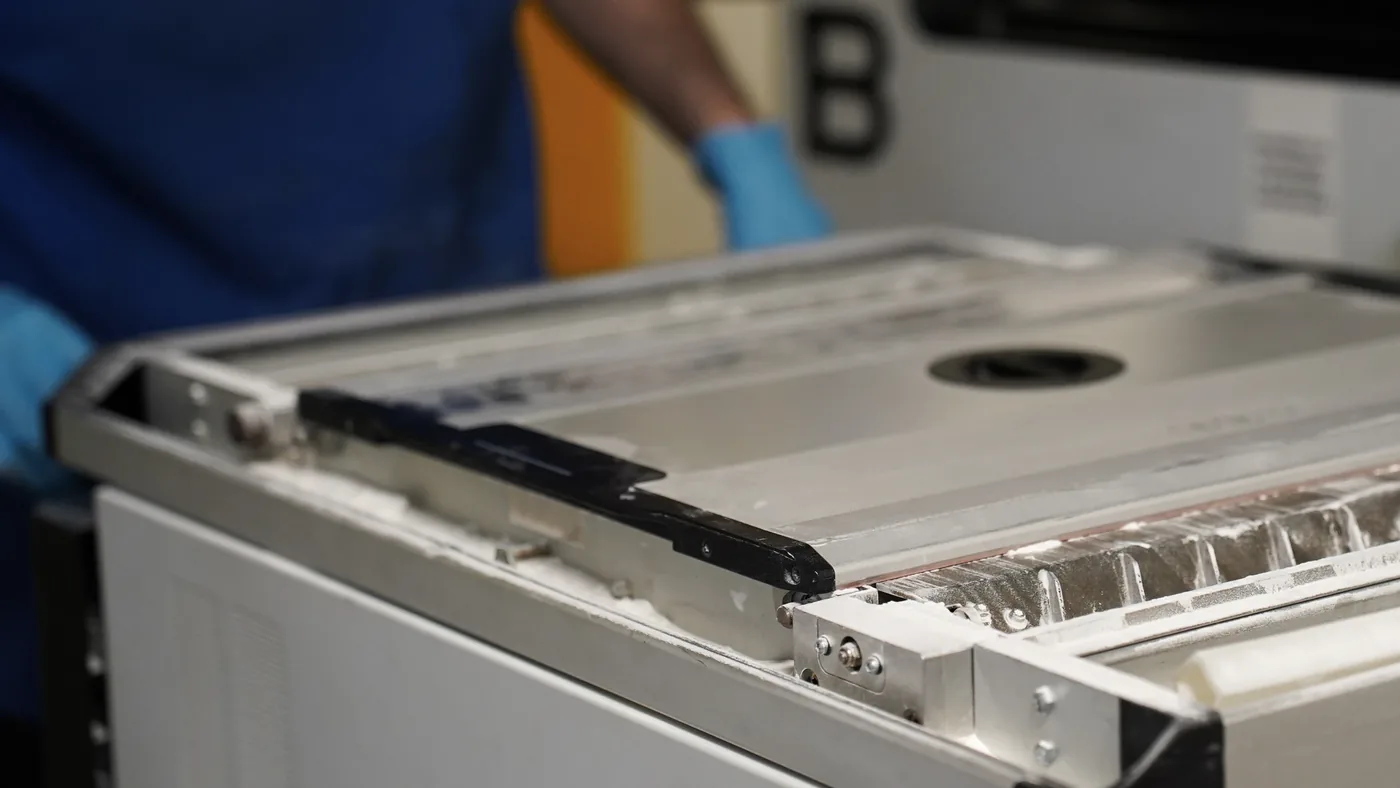
The unfused powder supports the parts as they build: no dedicated supports are needed, and cavities and undercuts become possible. Cavities and channels must allow the powder to be removed.
4 materials available:
MARCA MJF PA12-01
The workhorse of 3D printing.
Strong, accurate, ready to use. It is the material for brackets, housings and spare parts that really work — not showcase prototypes.
minimum wall thickness 0.7 mm · density 1.01 g/cm³
MARCA MJF PA12-01
The same strength, in white.
When the part is on show: a clean surface, ready to be coloured or left as it is.
minimum wall thickness 0.7 mm · density 1.01 g/cm³
MARCA MJF PA12-GB40-01
Nearly 50 % more stiffness than PA12.
Glass beads in the polyamide: for housings and tooling that must not flex.
On request — not priced by the online configurator
minimum wall thickness 1 mm · density 1.3 g/cm³
MARCA MJF TPU-01
An elastomer fused by agent jetting.
Seals, bellows and guards with the geometric freedom of MJF, which needs no supports.
On request — not priced by the online configurator
minimum wall thickness 1.2 mm · density 1.1 g/cm³
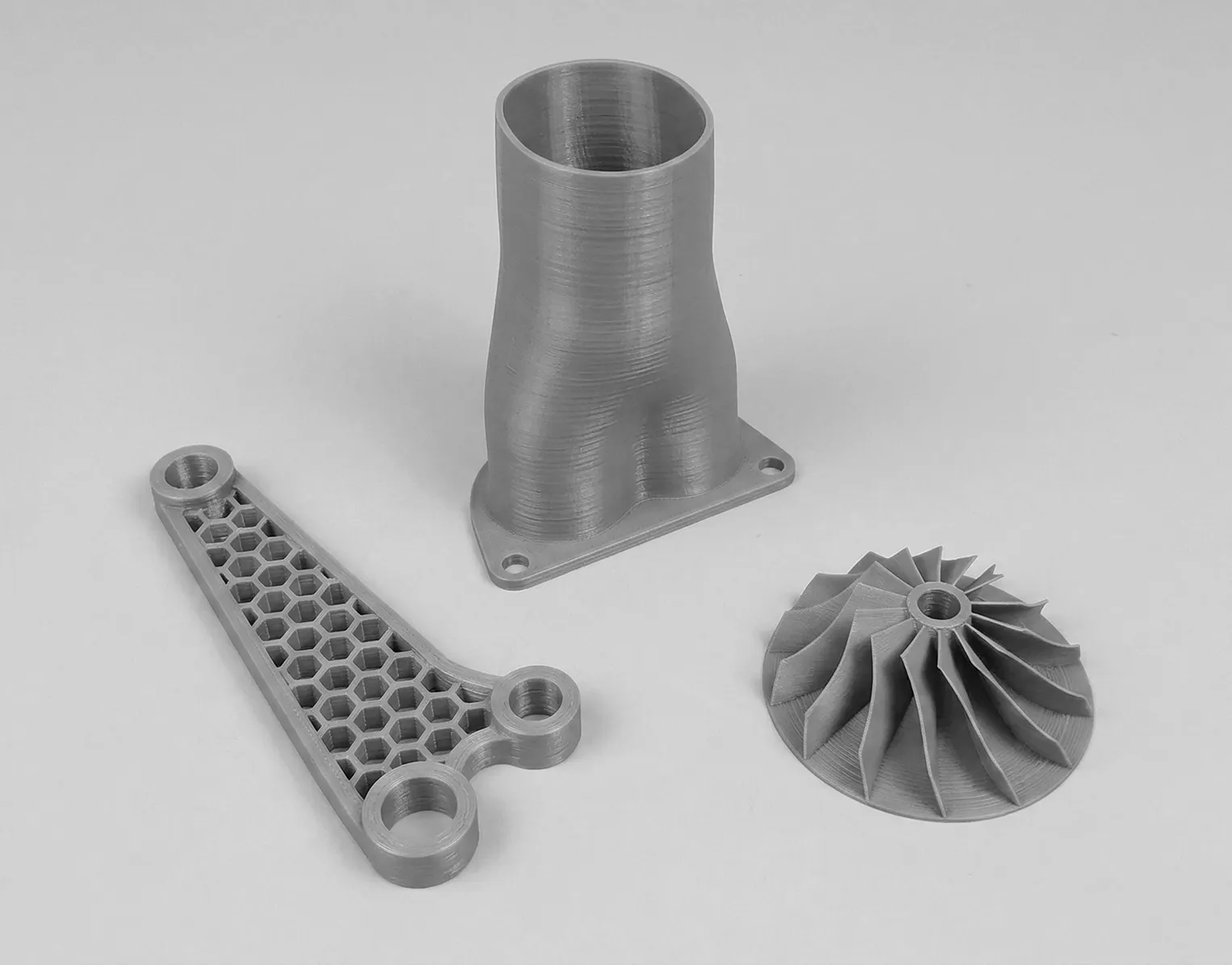
The widest range of materials, from rigid to flexible. When you need the right polymer for the right job, this is where you find it.
6 materials available:
MARCA FDM ABS-01
The classic that never lets you down.
It can be drilled, tapped, glued and painted: the favourite material of those who finish the part by hand.
minimum wall thickness 1.2 mm · density 1.04 g/cm³
Geometries no one else can set free.
The support dissolves in water and disappears: internal channels and undercuts come out clean, without a mark.
densità 1.1 g/cm³
Fast, cheap, surprisingly accurate.
The right choice for shapes, jigs and fit checks, when you need the part in your hand tomorrow. Better kept away from heat.
minimum wall thickness 1.0 mm · density 1.24 g/cm³
MARCA FDM ASA-01
Born to stay outdoors.
Sun, rain, temperature swings: it does not yellow and does not chalk. The outdoor material, no compromises.
minimum wall thickness 1.2 mm · density 1.07 g/cm³
It bends, it springs back, it does not break.
Gaskets, bump stops, soft grips, pads: everything that has to give a little and stay where it is.
minimum wall thickness 1.5 mm · density 1.22 g/cm³
MARCA FDM PA12-CF-01
As stiff as few, as light as a polymer.
Nylon 12 filled with 35 % carbon fibre: brackets, mounts and tooling where the stiffness-to-weight ratio matters.
minimum wall thickness 1.0 mm · density 1.15 g/cm³
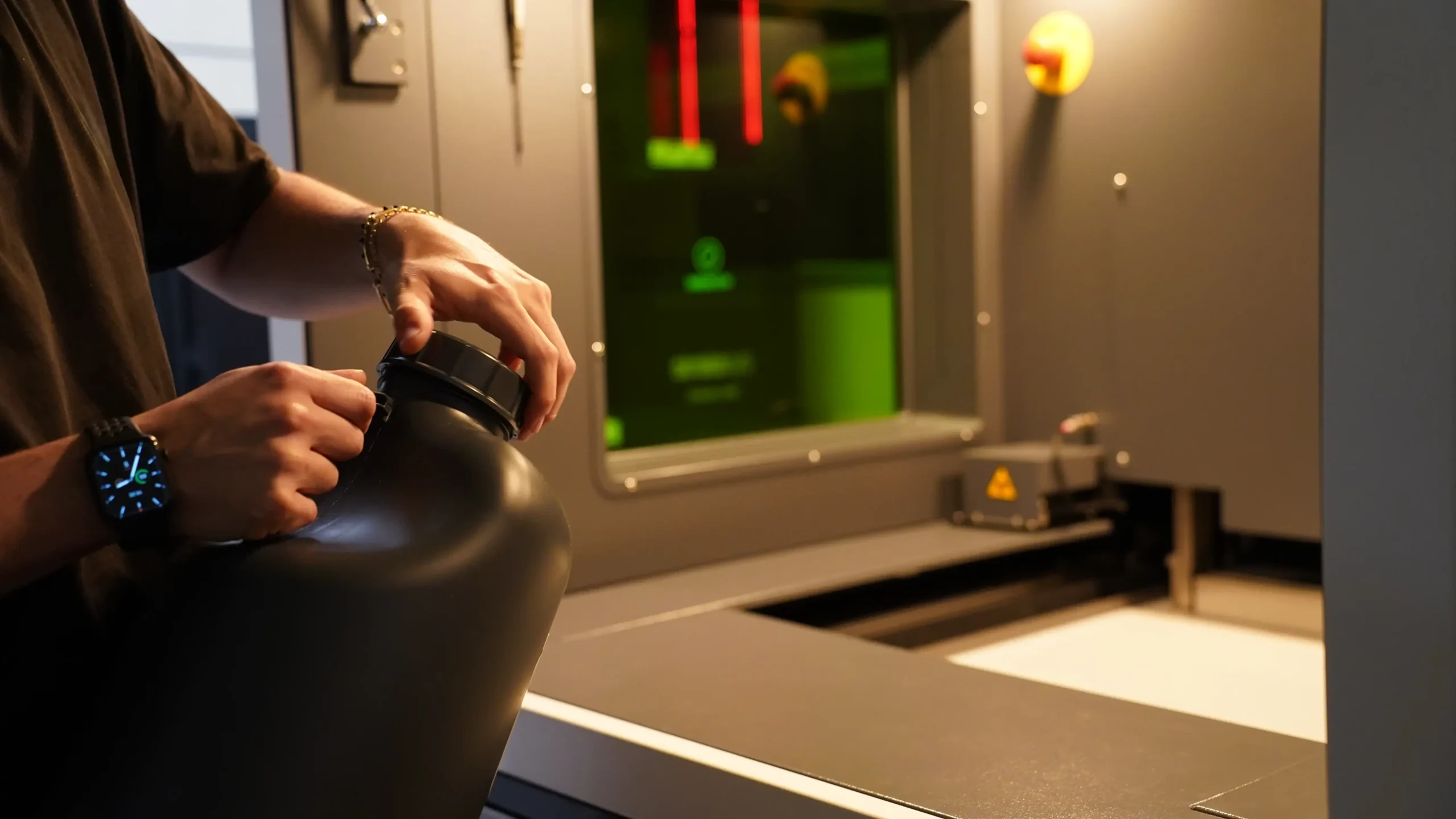
An ultraviolet laser cures the liquid resin section by section. It is the route to fine detail and a smooth surface, on the largest build volume we have.
3 materials available:
MARCA SLA RESIN-01
The reference choice in stereolithography.
Smooth surface and fine detail for high-precision aesthetic and functional prototypes.
On request — not priced by the online configurator
minimum wall thickness 0.6 mm · density 1.12 g/cm³
MARCA SLA CLEAR-01
Transparent, glass-like.
When the part must show what is inside: fluids, light, levels, clearances.
On request — not priced by the online configurator
minimum wall thickness 0.6 mm · density 1.13 g/cm³
MARCA SLA RESIN-02
The toughest in the SLA range.
It stretches 24 % before breaking: it absorbs impact instead of snapping.
On request — not priced by the online configurator
minimum wall thickness 0.6 mm · density 1.13 g/cm³
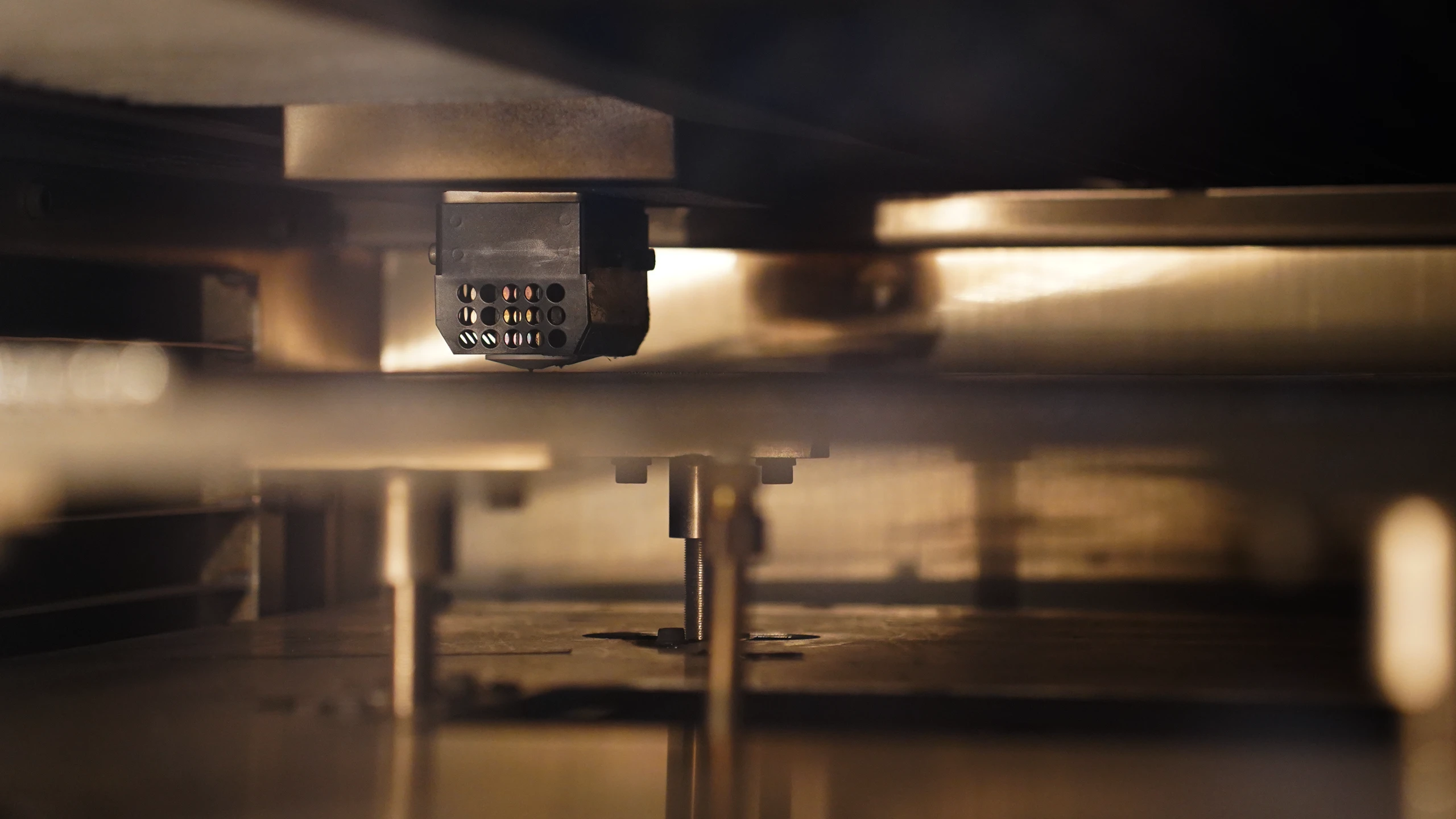
A whole layer at every flash of light. Small and medium parts where finish and detail matter, with the widest range of resins: elastomeric, technical, biocompatible, ceramic.
9 materials available:
MARCA DLP ELASTO-01
An elastomer that springs back.
Seals and flexible parts with DLP detail.
On request — not priced by the online configurator
minimum wall thickness 0.5 mm · density 1.1 g/cm³
MARCA DLP RESIN-01
General purpose, well balanced.
Stiffness, strength and elongation without excelling in any of the three: the choice when no single requirement dominates.
On request — not priced by the online configurator
minimum wall thickness 0.5 mm · density 1.18 g/cm³
MARCA DLP RESIN-05
High temperature and antistatic together.
185 °C HDT and electrostatic dissipation: tooling that works hot near electronics.
On request — not priced by the online configurator
minimum wall thickness 0.5 mm · density 1.22 g/cm³
MARCA DLP RESIN-02
Tough, it absorbs impact.
43 % elongation: it deforms instead of breaking.
On request — not priced by the online configurator
minimum wall thickness 0.5 mm · density 1.18 g/cm³
MARCA DLP RESIN-04
The most heat-resistant.
HDT above 300 °C and FST certification: where the other resins cannot go.
On request — not priced by the online configurator
minimum wall thickness 0.5 mm · density 1.39 g/cm³
MARCA DLP RESIN-06
For medical applications.
The ISO 10993 cytotoxicity and sensitisation tests are passed on the material.
On request — not priced by the online configurator
minimum wall thickness 0.5 mm · density 1.2 g/cm³
MARCA DLP RESIN-03
Structure and toughness together.
52.5 MPa at break and 21.4 % elongation: the best-balanced compromise in the projection range.
On request — not priced by the online configurator
minimum wall thickness 0.5 mm · density 1.2 g/cm³
MARCA DLP CERAMIC-01
Ceramic-filled, extremely stiff.
10,300 MPa modulus and HDT above 280 °C: this is the fast-tooling insert resin. Brittle.
On request — not priced by the online configurator
minimum wall thickness 0.5 mm · density 1.73 g/cm³
MARCA DLP SILICONE-01
Real silicone, not an elastomer imitating it.
Shore A 25 and 672 % elongation: seals and soft parts.
On request — not priced by the online configurator
minimum wall thickness 0.5 mm · density 1.3 g/cm³
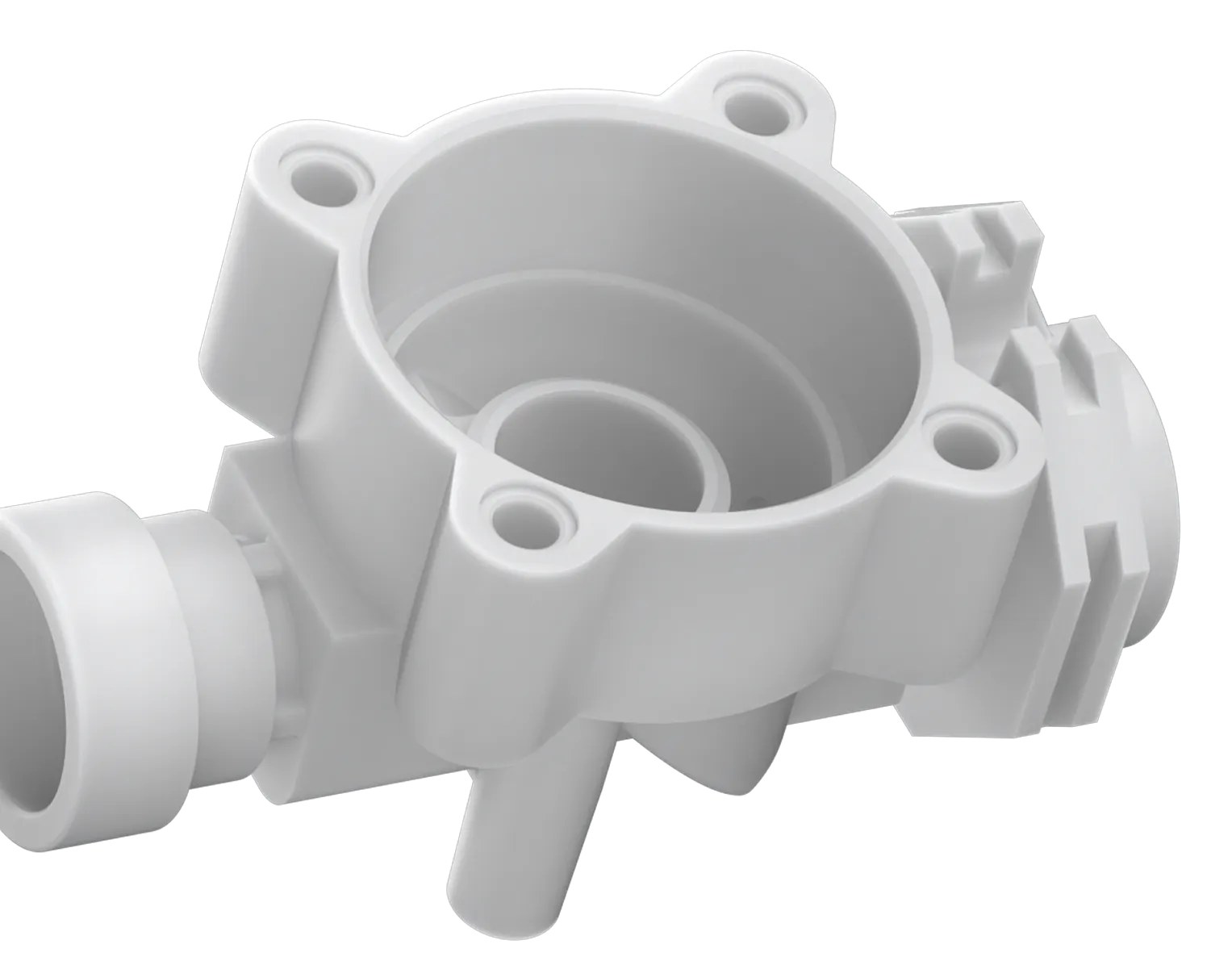
Fifty years of moulds and presses. The department runs over twenty polymer families, from commodities to engineering plastics that replace metal, with the moulds designed and maintained in-house.
Main families available:
None of these families goes through the online configurator: moulding starts from a mould, and the price depends on the part and the volumes. Quotation on request.
When looks matter.
Even surface, paintable and chrome-platable, dimensional stability: housings, covers, visible parts. Antistatic, UV-stabilised, V0 flame-retardant and recycled grades also in production.
It is attacked by solvents and, without UV protection, yellows and turns brittle outdoors. High-impact polystyrene fares worse still: it is for indoor use.
Density 1.03–1.04 g/cm³
Price 1.5–15.0 €/kg
Brands and manufacturers
The soft part, moulded over the hard one.
Gaskets, grips and seals obtained by overmoulding onto the rigid part, with no bonding or later assembly. Hardness from 50 to 85 Shore A, in polyurethane, styrenic and vulcanised grades.
TPU absorbs moisture and must be dried carefully, or the part comes out with bubbles and streaks. The soft compound only bonds to certain rigid materials: where it does not, the part needs a mechanical key, and that has to be designed into the mould.
Density 0.88–1.26 g/cm³
Price 4.0–15.5 €/kg
Brands and manufacturers
For everything that moves.
Low friction, dimensional stability and excellent fatigue resistance: gears, guides, cams, hinges. Available in self-lubricating grades, with PTFE or silicones, and UV-stabilised.
It will not bond or take paint without surface treatment: the surface is too inert. And above 230 °C in the barrel it degrades releasing formaldehyde, so the thermal profile is not something to improvise.
Density 1.41–1.42 g/cm³
Price 2.0–9.0 €/kg
Brands and manufacturers
Tougher than 66, and easier to mould.
It absorbs more moisture and needs careful drying, but takes impact better. Glass fibre from 10 to 50 %, mineral-filled grades to contain shrinkage, glass beads for flatness, and V0 flame-retardant types.
It absorbs more moisture than PA 66 — up to 3 % in ambient conditions — and with it dimensions and stiffness change. Shrinkage is high and anisotropic on reinforced grades: warpage is controlled by the mould, not by the parameters.
Density 1.14–1.55 g/cm³
Price 2.0–18.5 €/kg
Brands and manufacturers
The material most of the work is done with.
Stiff, heat- and oil-resistant: the usual choice for structural parts under the bonnet and inside machinery. Glass fibre from 15 to 60 %, carbon-fibre grades where stiffness at minimum weight is needed, self-lubricating for sliding parts, UV-stabilised and recycled.
It must be dried before every run, without exception. And datasheet values are dry-as-moulded: in service, conditioned to ambient humidity, stiffness drops appreciably. Designing on the producer's figures without allowing for it errs on the unsafe side.
Density 1.08–1.82 g/cm³
Price 2.5–44.0 €/kg
Brands and manufacturers
The engineering plastics that replace metal.
Three distinct families — polyphthalamide (PPA), polyamide 4.6 and polyarylamide (PARA) — considered when specific combinations of thermal, mechanical and dimensional performance are needed. They are not interchangeable: the choice calls for comparing grades under the intended service conditions. Reinforcement from 30 to 50 % glass fibre, plus mineral-filled grades. Regularly processed: Grivory HT1V-4 and Zytel HTN (PPA), Stanyl TW371 (PA 4.6), Ixef (PARA).
They cost five to ten times a common polyamide and call for hot moulds and suitable presses. The comparison with a heat-stabilised conventional polyamide has to be made on the grade’s heat-ageing data, under the intended conditions of service life, load and environment.
Density 1.25–1.75 g/cm³
Price 7.5–34.0 €/kg
Brands and manufacturers
Stable, insulating, with low moisture absorption.
The engineering plastic of electrical equipment: connectors, contact carriers, housings. Glass fibre from 20 to 50 %, V0 flame-retardant and self-lubricating grades.
It is prone to hydrolysis: in hot water or steam above 60 °C it ages quickly, and such duty calls for specific grades. It is also notch-sensitive, so sharp corners and undercuts must be radiused.
Density 1.22–1.74 g/cm³
Price 2.0–12.0 €/kg
Brands and manufacturers
Transparency and impact resistance together.
When the part must take a knock without breaking, or let light through. V0 flame-retardant grades for electrical equipment, UV-stabilised for outdoor use, reinforced with 10 to 20 % glass or with carbon fibre.
Stress cracking is its weak point: in contact with certain solvents, oils and adhesives it cracks under residual stress, even months later. It must be dried carefully and is attacked by alkalis.
Density 1.19–1.27 g/cm³
Price 2.5–10.5 €/kg
Brands and manufacturers
Stiffness and stability under heat.
Polyester filled with 30 % glass fibre for parts that must hold tolerance under load and temperature, also in a flame-retardant version.
The mould temperature must be chosen according to the grade and the wall thickness, to achieve adequate crystallisation, surface finish and dimensional stability. Drying is essential to limit hydrolytic degradation during processing.
Density 1.56–1.59 g/cm³
Price 5.5–9.5 €/kg
Brands and manufacturers
Where temperature is unforgiving.
Continuous service above 200 °C, almost total chemical resistance and dimensional stability under load. Reinforced with 30 to 40 % glass fibre, inherently flame-retardant with no additives needed.
Unreinforced it is brittle, and in any case low in impact toughness. It calls for high process temperatures and hot moulds, so it is not a material for improvised short runs. The cost is what it is.
Density 1.54–1.95 g/cm³
Price 8.5–23.5 €/kg
Light and cheap, resistant to many chemicals.
Good resistance to many acids, bases and aqueous solutions: compatibility must however be checked against substance, concentration, temperature and contact time, with particular attention to oxidisers and solvents. It takes living hinges that flex thousands of times without failing. Reinforced with 30 to 50 % glass fibre or mineral filler, UV stabilised, and available in recycled grades.
Low in stiffness and dimensional stability compared with engineering plastics, and without stabilisers it does not stand the sun. It bonds and takes paint poorly without surface treatment.
Density 0.90–1.24 g/cm³
Price 1.5–7.0 €/kg
Brands and manufacturers
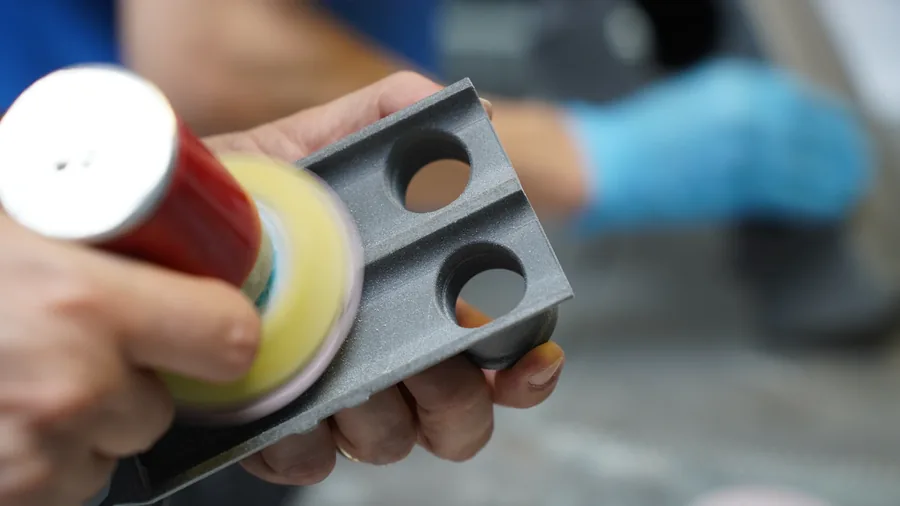
Parts that came out of our own machines: geometries that elsewhere would need moulds, finishes obtained in house.
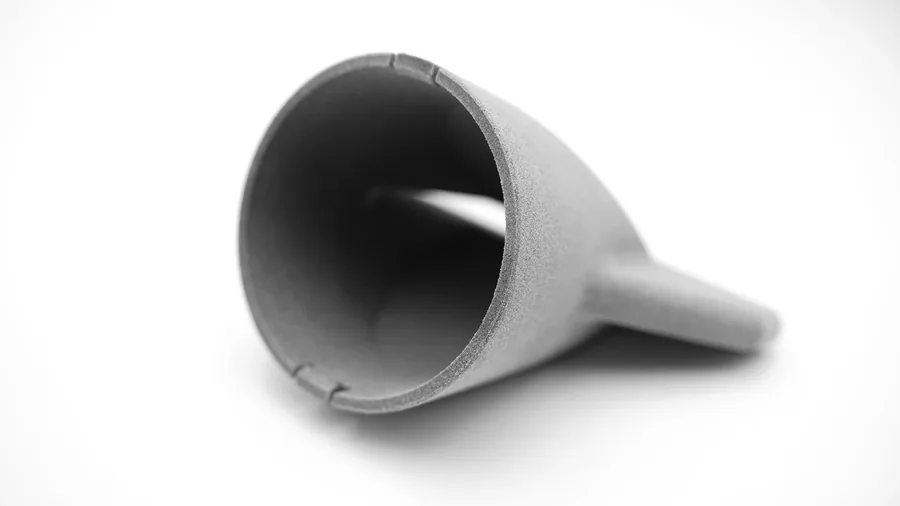
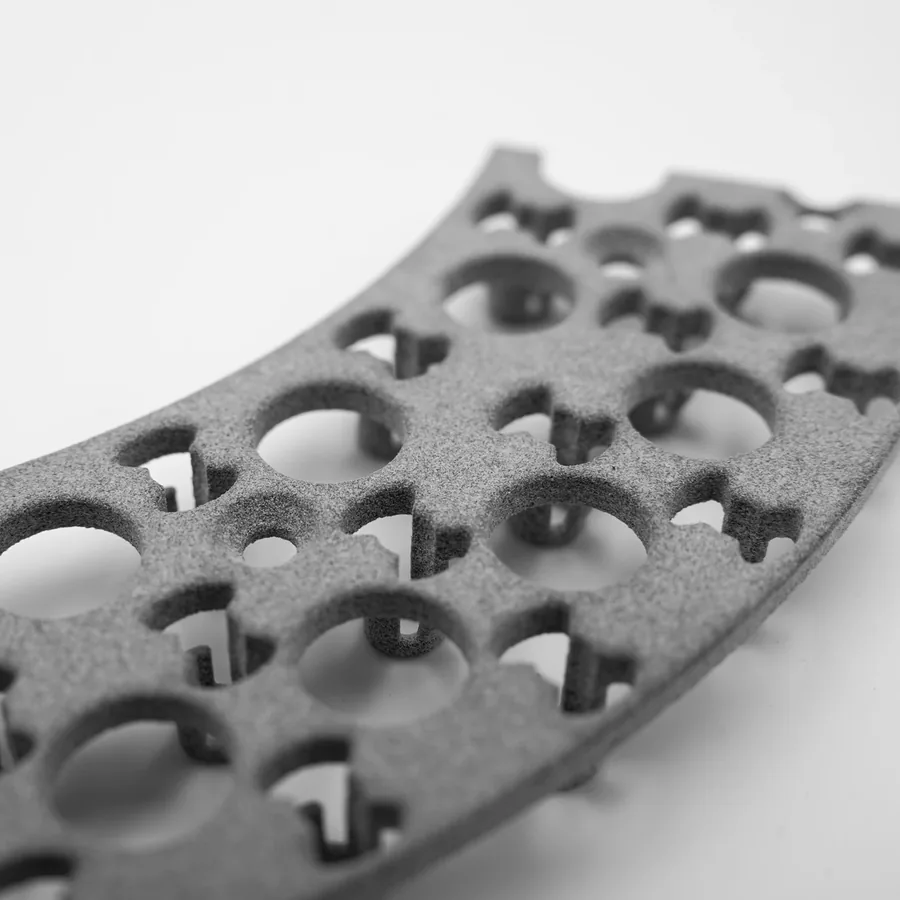
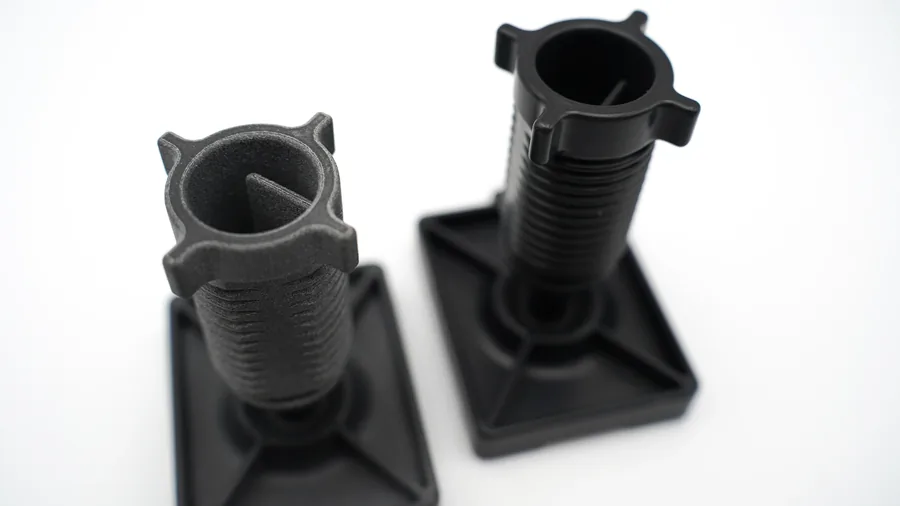
Not sure which one to choose? You do not have to decide on your own. Upload the model: in a few minutes you have the price, the delivery times and an automatic check that warns you if something cannot be produced — before you order, not after.
Wall thickness, undercuts, draft angles and weak steel in the mould: the same measurements we look at ourselves, on your file, in a few seconds.
Analyse your part